
The OBBBA’s Potential Ripple Effect on Latino Education and Wealth Building
The OBBBA’s Potential Ripple Effect on Latino Education and Wealth Building
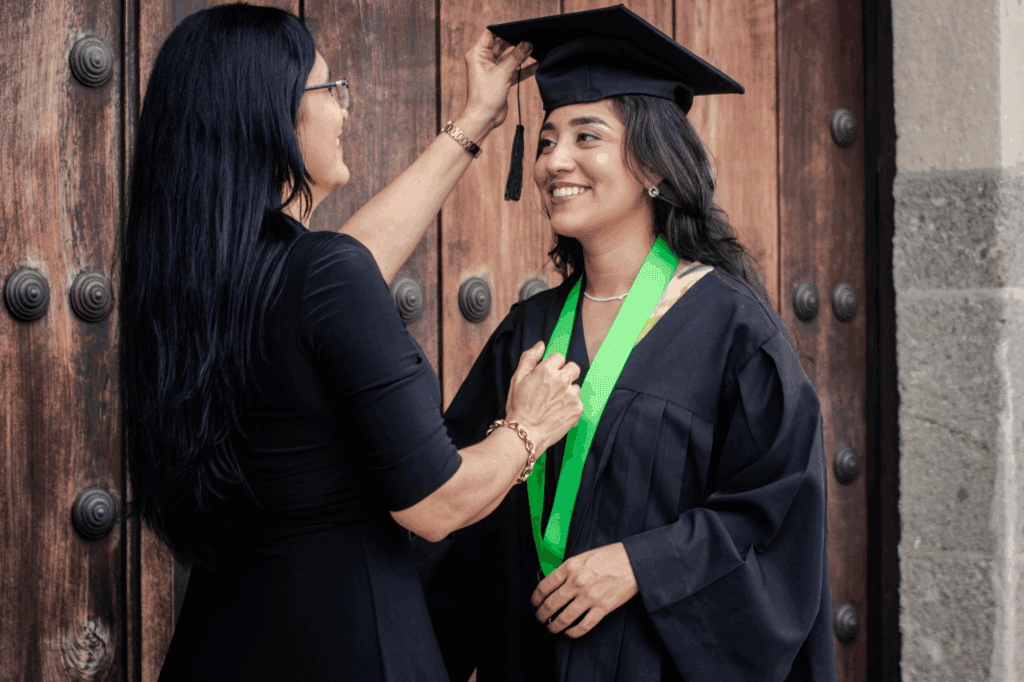
I once asked a client to close her eyes and picture what she dreamed for her daughter.
“I see her in a cap and gown, walking across the stage, and a white man handing her a degree,” she said in Spanish.
In our community, there’s a strong emphasis on getting that advanced degree to unlock success, do well financially, and be able to build that American dream so many of our ancestors chased all the way here. But it’s a fact that there are various factors—both systemic and individual—that lead to educational disparities. And even though we are a resilient people and persist and achieve through all types of challenges, we need to be aware of them to navigate them.
The so‑called One Big Beautiful Bill Act (OBBBA) has introduced a few more hurdles we’ll need to navigate when pursuing our educational dreams. Many of OBBBA provisions I mention in this article don’t go into effect until July of 2026, but it’s important that we know them and start planning now. Let’s get into what these provisions are, how they might impact our community, and what we can do to navigate them.
How Education Builds Wealth—And How We Pay for It
Education pays—big time. A bachelor’s degree nets individuals $1.2 million more in lifetime earnings, along with significantly lower unemployment rates and higher financial wellbeing compared to those with only a high school diploma, according to the Association of Public & Land-Grant Universities.
Social Security data shows bachelor’s holders earn roughly $900,000 more than high‑school grads over their lifetimes—$1.5 million more for graduate degree holders (men) and $1.1 million more (women).
Young adults ages 25–34 with a master’s or higher earn a median of $80,200 per year, compared to $66,600 for bachelor’s holders, according to the National Center for Education Statistics.
A four‑year degree triples the chance that someone born into the lowest income bracket will reach the top as an adult.
And when it comes to wealth building, higher education helps amplify earning power, which in turn facilitates saving, asset-building, and the creation of generational wealth.
Latinos are more likely to apply for student aid and be approved when attending college. They are more likely to rely on grants (67 percent) rather than loans (27 percent) to cover bachelor’s degree costs, according to Exelencia in Education’s How Latinos Pay for College: 2025 National Trends.
But when it comes to graduate school, approximately 92.5 percent of Latinos rely heavily on loans to fund professional and other doctoral degrees. We take out an average of $130,252 per borrower, according to the American Council on Education.
OBBBA’s Education Provisions: Barriers to Navigate and Elements to Plan For
OBBBA includes a mix of changes that can hinder (and a few that we could plan to be beneficial) Latino students and families.
Limits to graduate aid. Given that we rely heavily on loans for professional and terminal degrees, the limits to graduate aid could potentially impact us. The OBBBA eliminates subsidized graduate loans, caps unsubsidized loans, and narrows income-driven repayment plans—potentially driving up costs and delaying forgiveness for low‑income and first‑gen Latino students.
Tax changes for colleges: Higher taxes on big college endowments could reduce institutional funding and financial aid availability. Given the stat that we apply for and receive aid at higher rates than other demographics, this could also be a harmful policy for our community.
Shift toward privatization. Federal tax credits now favor private school scholarships, which may divert funding from public systems serving Latino communities, according to Investopedia.
But there are two things we can use to our benefit in the OBBBA, including the tax-advantaged accounts and utilizing Pell grants for career training.
Tax-advantaged investment accounts. Tax-advantaged investment accounts seeded with $1,000 per child for children born between 2025–2028 allowing up to $5,000 annual parent contributions for education, job training, or home down payments. These accounts also allow employers to contribute an additional $2,500 tax free. Children can take distributions from these accounts at age 18. Investopedia reports you can open these accounts for your children born before 2025, you just won’t have access to the $1,000.
Workforce Pell Grant support for career training. Students pursuing short-term career training programs will be eligible for Workforce Pell Grants starting in July of 2026. Prior to this, Pell Grants were only available for programs that were at least 15 weeks long and with this new provision, students might qualify for aid for programs that are at least 8 weeks long. The caveat here is that these grants are only available to students with a bachelor’s degree but not a master’s degree, those who demonstrate financial need, and must be enrolled in a program that is approved under this initiative.
How Latino Families Can Plan Around the OBBBA
We need to be intentional about our educational planning—especially now in light of the changes from the OBBBA. Here are some ways we can plan for success:
Ensure you pick the right educational path. I always want to make sure college is the right fit for clients’ children before they make the financial commitment to attend college. I often dive into their report cards, see what they are interested in and what they want to do with their lives. Sometimes college isn’t the right path and it’s better to find out early before taking out loans. Some trades pay a great salary without having to go to college.
Start early with tax-advantaged accounts for kids. If your child is born between 2025–2028, they qualify for the OBBBA’s tax-advantaged account. Set up their accounts early to capitalize on that $1,000 kickoff and contribute annually to grow educational savings tax-deferred.
Prioritize undergraduate scholarships and grant-aware planning. Given limits on future graduate aid and loan burdens, focus first on scholarships, Pell Grants, and maximizing undergraduate funding. There are many scholarships geared toward our community to explore, including the Hispanic Scholarship Fund, McDonald’s HACER National Scholarship, and Hispanic Heritage Foundation’s Youth Awards.
Use short-term training programs strategically. With increased support for vocational and certificate programs, consider if high-quality short-term credentials might offer faster return on investment or bridge pathways to higher earning potential.
Stay alert to changes in repayment options. Review federal student loan income-driven plans and caps. You may need to shift to other funding strategies to minimize long-term costs.
Strengthen financial literacy early. Begin financial planning conversations at home. Put savings tools and wealth-building mindsets in practice early—which boosts both education attainment and long-term economic security.
Focus on starting your own businesses. Our community is entrepreneurial and we are starting businesses faster than any other demographic. Oftentimes the point of education is to go work for somebody else, but a completely viable option for building generational wealth is to start your own business doing something you’re passionate about and qualified to do.
Final Thoughts
For Latino families, education remains one of the most powerful tools for upward mobility and wealth building. Take my client in the beginning of this article—she literally dreamed about her daughter crossing the stage to get her bachelor’s degree.
The OBBBA constructs new barriers to making that dream happen for many. But we can plan around those barriers and utilize some of its provisions like Workforce Pell Grants for career training support. Navigating this landscape will require intentional planning and cultural resilience.
If you’d like ongoing guidance rooted in our community’s values, join my community to subscribe to my newsletter, Dinero con Corazón—where I share heart-centered financial planning advice tailored to Latino families building their own American dreams.
